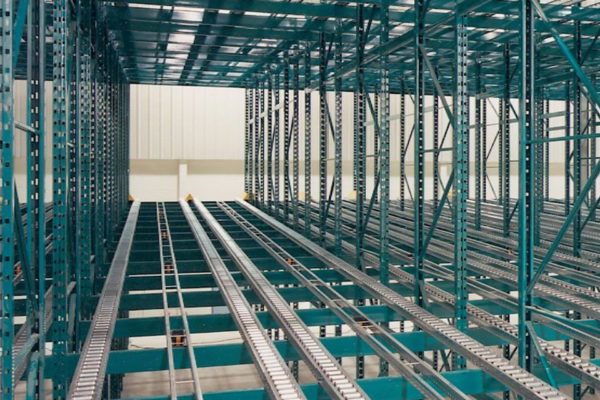
Pallet flow racking systems are an integral part of efficient warehouse operations, particularly suited for high-density storage needs. They offer an excellent solution for managing inventory with a first-in, first-out (FIFO) approach, maximizing storage capacity while reducing handling times. As businesses continue to evolve, so does the need for advanced and flexible storage solutions, making pallet flow systems a pivotal choice for many industries.
What is a Pallet Flow Racking System?
A pallet flow racking system utilizes a gravity-fed mechanism where pallets are loaded into one side and flow down to the opposite side on inclined rollers or wheels. This system ensures that the first pallet in is the first pallet out, which is ideal for perishable goods or items with an expiration date.
Key Components
- Rollers: These are the core elements that facilitate the movement of pallets along the rack system.
- Brakes: Installed on the rollers to control the speed of the pallets as they move down the incline.
- Entry Guides: Assist in ensuring pallets are loaded correctly into the system.
- Stop Beams: Prevent pallets from rolling out of the system uncontrollably.
Advantages of Pallet Flow Racking Systems
Pallet flow racking systems offer numerous benefits that enhance warehouse efficiency and inventory management. Some of the key advantages include:
- Increased storage density and utilization of space.
- Reduction in handling times, thus increasing productivity.
- Improved inventory management through FIFO rotation.
- Enhanced safety by minimizing forklift movement in aisles.
For more detailed insights on how these systems can revolutionize storage management, explore advanced guides and tips.
Applications of Pallet Flow Racking Systems
These systems are particularly beneficial in industries requiring efficient inventory turnover and space optimization. Common applications include:
- Food and Beverage: Ensures that perishable goods are rotated efficiently.
- Pharmaceuticals: Maintains strict FIFO inventory control for sensitive health products.
- Manufacturing: Supports just-in-time delivery processes.
- Cold Storage: Maximizes space while maintaining product integrity in temperature-controlled environments.
To find out more about this approach and its specific applications, consider expert resources available online.
Considerations for Implementation
When implementing a pallet flow racking system, several factors must be considered to ensure optimal performance:
- Weight and type of pallets used.
- Available warehouse space and layout.
- Specific industry requirements concerning inventory management.
- Equipment compatibility and maintenance needs.
It’s essential to tailor the racking system to fit the unique needs of a business. To learn about tailored solutions for different industries, consulting with specialists is recommended.
Conclusion
Pallet flow racking systems represent a sophisticated solution for businesses aiming to enhance warehouse efficiency through strategic inventory management. By understanding the components, advantages, and applications, companies can make informed decisions to improve their storage capabilities. For those seeking to enhance their warehouse operations, discover expert strategies here.