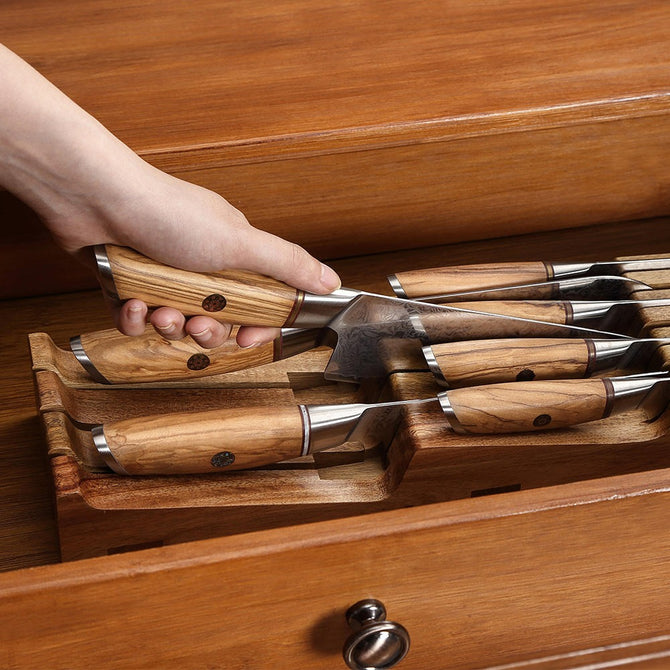
The kitchen is often the heart of the home, a place where culinary creativity comes to life. An organized kitchen not only enhances efficiency but also elevates the cooking experience. One critical aspect of kitchen organization is the storage of knives, which are essential tools for any chef, professional or amateur. Selecting the right knife holder or block can greatly impact both the functionality and aesthetics of any kitchen space. This article delves into the various types of knife storage solutions, offering insights into their benefits and helping to make an informed choice.
Understanding Knife Storage Options
Knife storage solutions come in various forms, each offering unique advantages. The choice of a suitable kitchen knife block or holder depends on various factors including kitchen space, knife collection size, and personal preference.
Traditional Knife Blocks
Traditional knife blocks are a ubiquitous choice for many kitchens. They are typically made from wood and provide a classic yet functional way to store knives. When considering a wooden knife block, it’s important to evaluate:
- Material: Most are crafted from durable woods like bamboo or acacia, which add elegance to the kitchen.
- Slot Design: Ensure the slots can accommodate the knives in your collection, including larger chef’s knives or cleavers.
- Maintenance: Wood blocks may require regular cleaning and oiling to maintain their appearance and hygiene.
Magnetic Knife Holders
For those looking to combine functionality with a modern aesthetic, magnetic knife holders are an excellent choice. These holders often mount on the wall, providing a space-saving solution. Consider the following:
- Strength: Ensure the magnets are strong enough to securely hold knives of varying weights.
- Material: Options range from stainless steel to wood, each offering a different look and feel.
- Installation: Wall-mounted designs require proper installation to ensure safety and stability.
In-Drawer Knife Blocks
In-drawer knife blocks are ideal for those who prefer to keep their countertops clutter-free. These blocks fit neatly into kitchen drawers, keeping knives out of sight but easily accessible. Key points to consider include:
- Drawer Size: Ensure your drawer has sufficient space to accommodate the block and allow for easy knife retrieval.
- Slot Arrangement: Check that the block’s design can accommodate the full range of your knife collection.
- Material: Typically crafted from wood or plastic, each with its own set of maintenance requirements.
Choosing the Right Knife Holder or Block
Selecting the right kitchen knife holder involves understanding one”?s needs and the kitchen”?s layout. Considerations include:
- Space Availability: Analyze the kitchen’s layout to determine whether a knife blocks without knives or wall-mounted holder is more suitable.
- Knife Collection: The number and types of knives owned can dictate the necessary size and slot configuration of the holder or block.
- Personal Style: Choose a design that complements the kitchen’s overall aesthetic, whether it’s a traditional wooden block or a sleek magnetic strip.
Maintenance and Care
Proper maintenance of knife storage solutions ensures longevity and hygiene. Regular cleaning and occasional oiling of wooden holders prevent the buildup of bacteria and preserve the material. For magnetic holders, wiping them down with a damp cloth can help maintain their appearance and functionality.
For those interested in exploring a variety of knife blocks and holders, numerous options are available to suit every kitchen style and need. Ultimately, the right choice will enhance both the efficiency of meal preparation and the kitchen”?s aesthetic appeal.